


Let’s be real for a second. If you look at the media, you might think building a startup is a straight line to the top. You come up with a brilliant idea in your garage, you launch it, customers throw money at you, and boom, you are the next tech billionaire.
But if you are a new entrepreneur, you need to hear the truth: that straight line is a complete myth.
According to seasoned entrepreneur and investor Howard Love, the actual path of a successful startup looks like the letter “J”. When you first start, you don’t go straight up; instead, you take a steep dip into what is often called the “Valley of Death”. Products take longer to build, customers don’t understand your initial offering, and cash starts burning fast. But don’t panic! This dip is totally normal.
In his book The Start-Up J Curve, Love breaks down the startup journey into six predictable phases. By understanding these phases, you can figure out exactly where you are, avoid deadly mistakes, and eventually ride that curve straight up to success. Let’s walk through them.
1. Create: It’s Not Just About the Idea
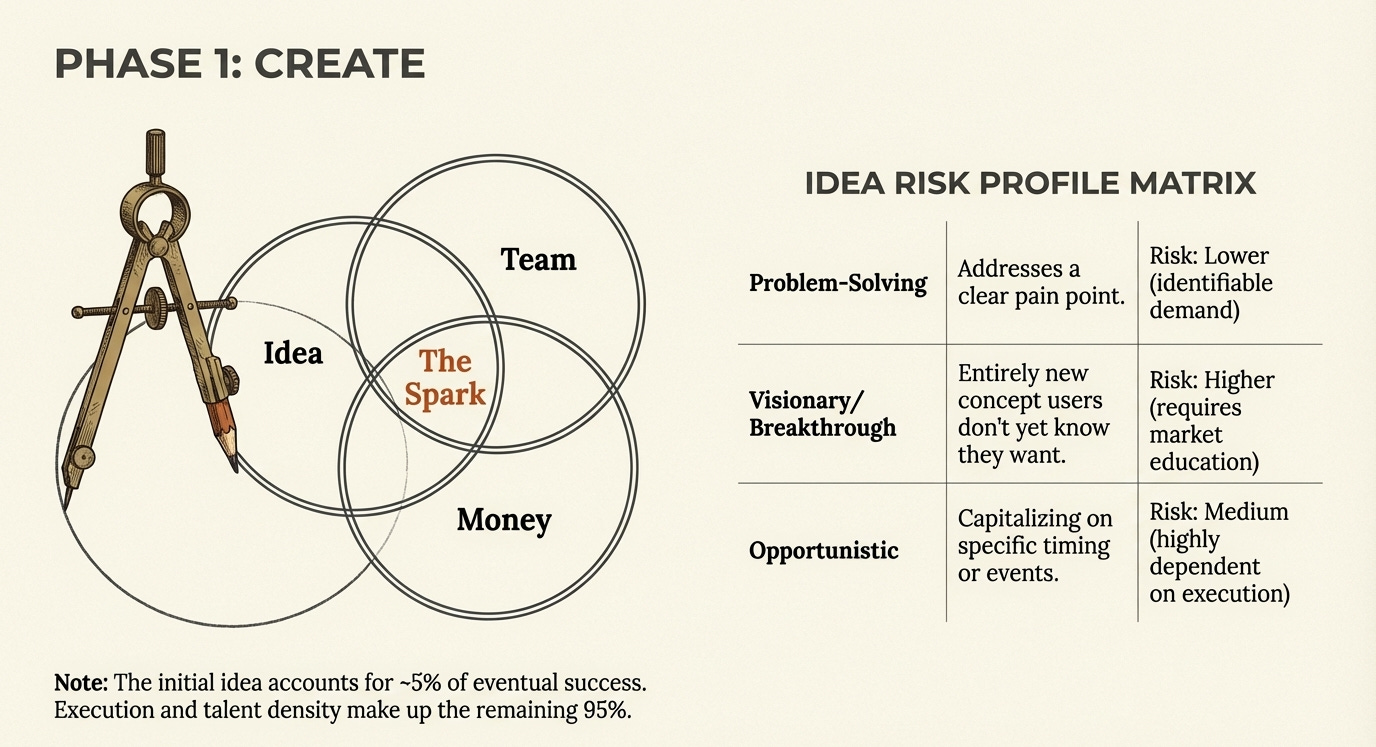
The first phase is where the magic begins. You have a vision, and your optimism is through the roof. However, Love shares a dirty little secret: your brilliant idea is only worth about 5% of the startup’s total value.
Why? Because execution is everything. You should treat your initial idea simply as a “hypothesis,” a guess that you are going to test in the real world. In the Create phase, your focus shouldn’t be on protecting a “perfect” idea, but rather on finding a real problem to solve, securing initial funding, and putting together a solid founding team to execute the vision.
2. Release: Get the Damn Thing Out There!
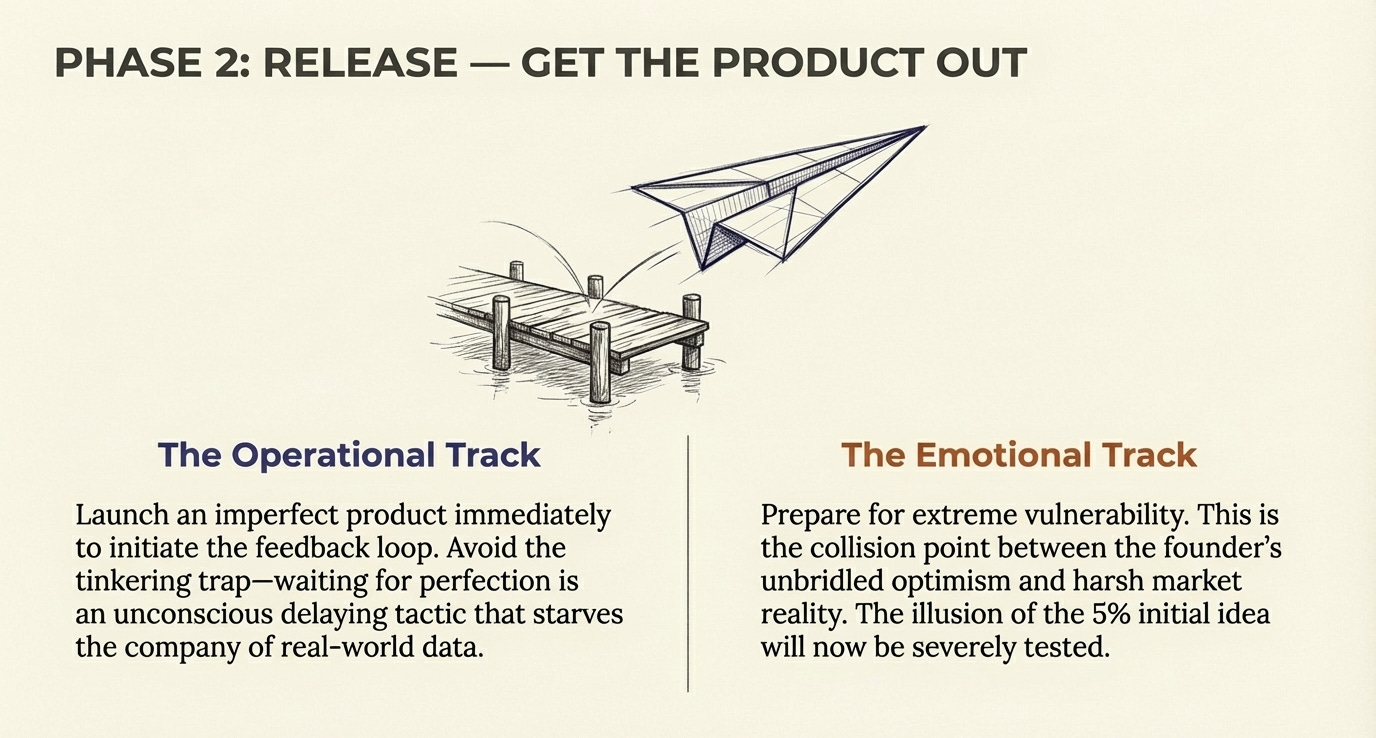
This is where many first-time founders freeze. They fall into the trap of perfectionism. They want to add just one more feature or do one more redesign before anyone sees it.
Love’s advice? Stop tinkering and get your product into the market. Your goal here is to release a Minimum Viable Product (MVP). It won’t be perfect, and that is exactly the point. You aren’t releasing it to make millions of dollars on day one; you are releasing it to get real feedback from real customers. Time is your enemy, so launch fast and listen closely.
3. Morph: Embrace Radical Change
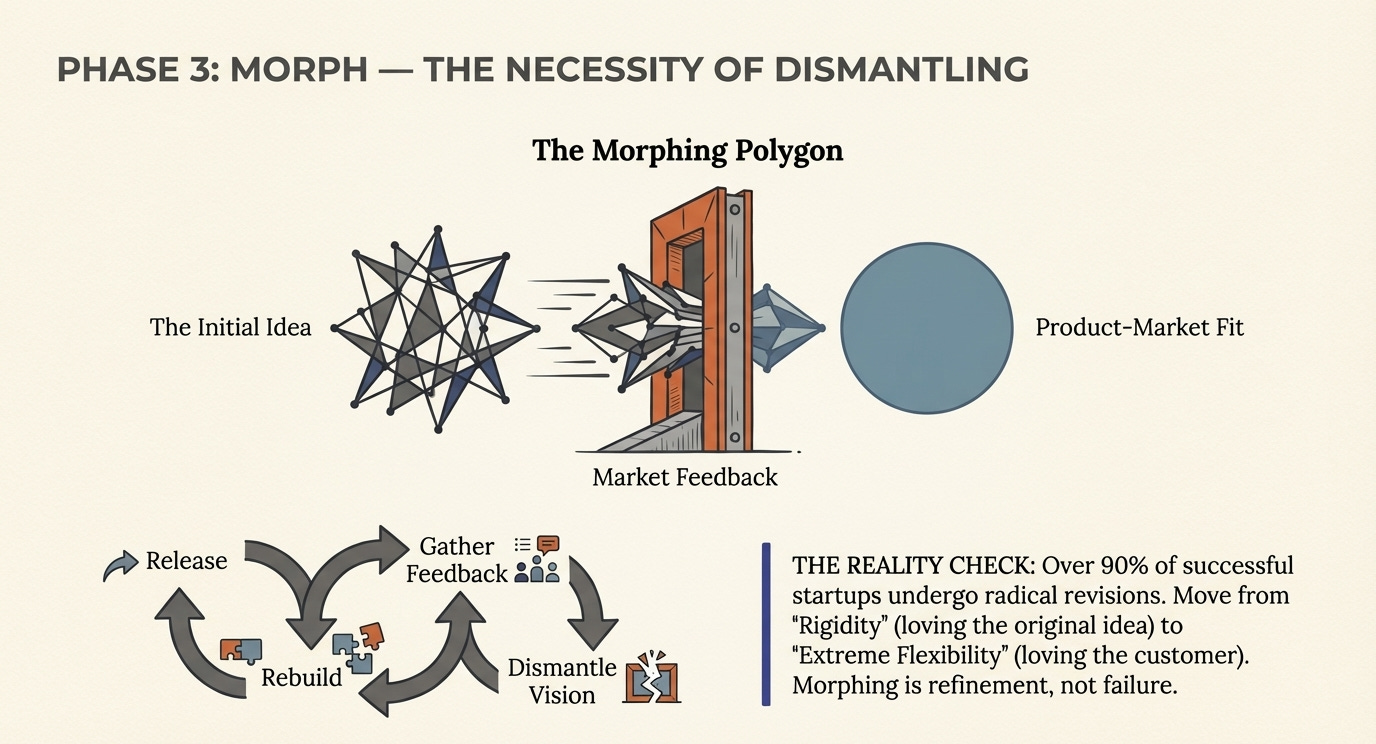
Here is a wild statistic: roughly 90% of startups have to drastically change their original business plan. When your product hits the market, customers might use it in ways you never imagined, or they might not care about the feature you spent months building.
This phase is all about “morphing” or pivoting. It can be painful to let go of your original vision, but you have to drop your ego. Your job is to adapt the product based on what the market is actually telling you. Don’t try to force a product on people who don’t want it. Change it until you find that sweet spot where customers genuinely love what you are doing.
4. Model: Nail It Before You Scale It
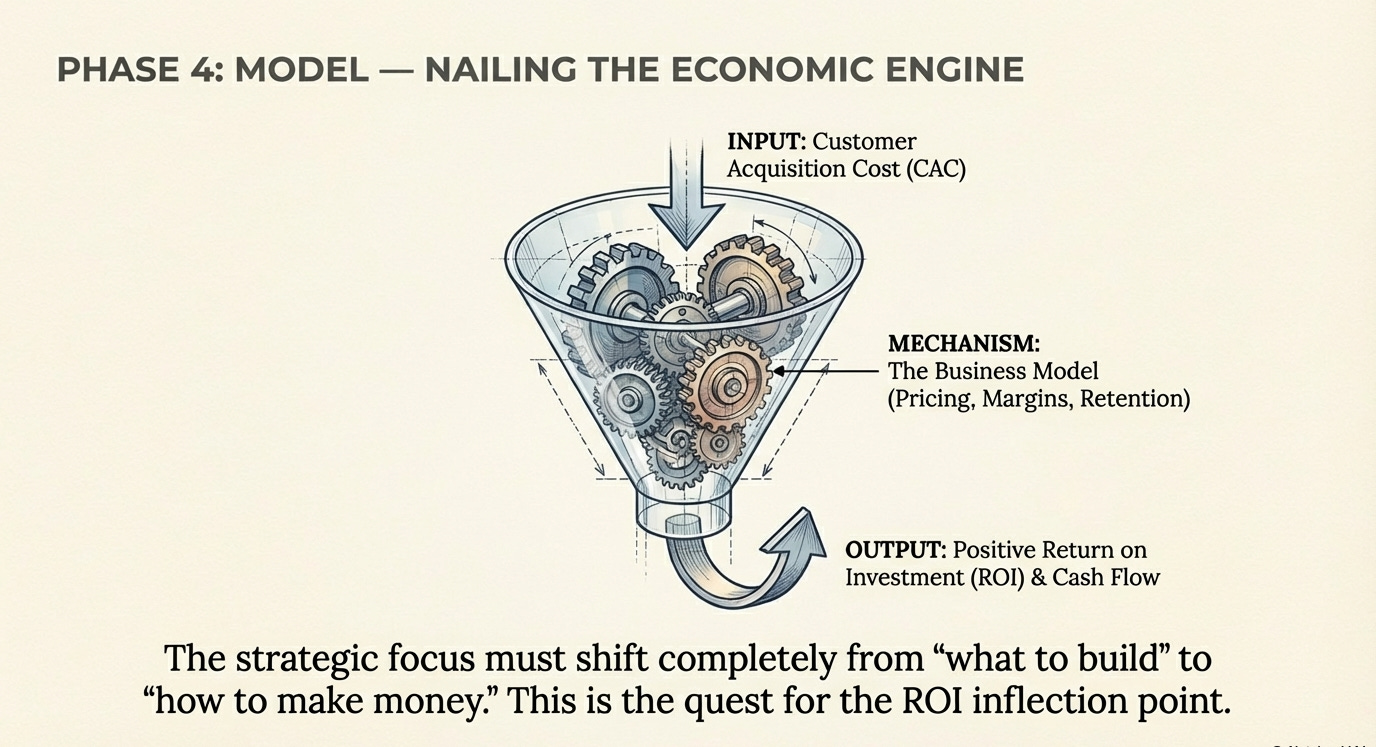
Once you have a product that people love, you need to figure out how to make actual money. The Model phase is about proving the economics of your business.
A lot of entrepreneurs think that a great product automatically equals a great business, but that’s not true. You need to find a business model where the revenue you make from a customer is higher than the cost of producing your product and acquiring that customer. Look for a model that has high margins, is easy for customers to buy (low friction), and can be repeated over and over again. Whatever you do, do not scale your business yet. Scaling a flawed business model is the fastest way to kill your startup.
5. Scale: Pouring Fuel on the Fire
Okay, you have a product people love, and a business model that makes a profit. Now it is time to go big.
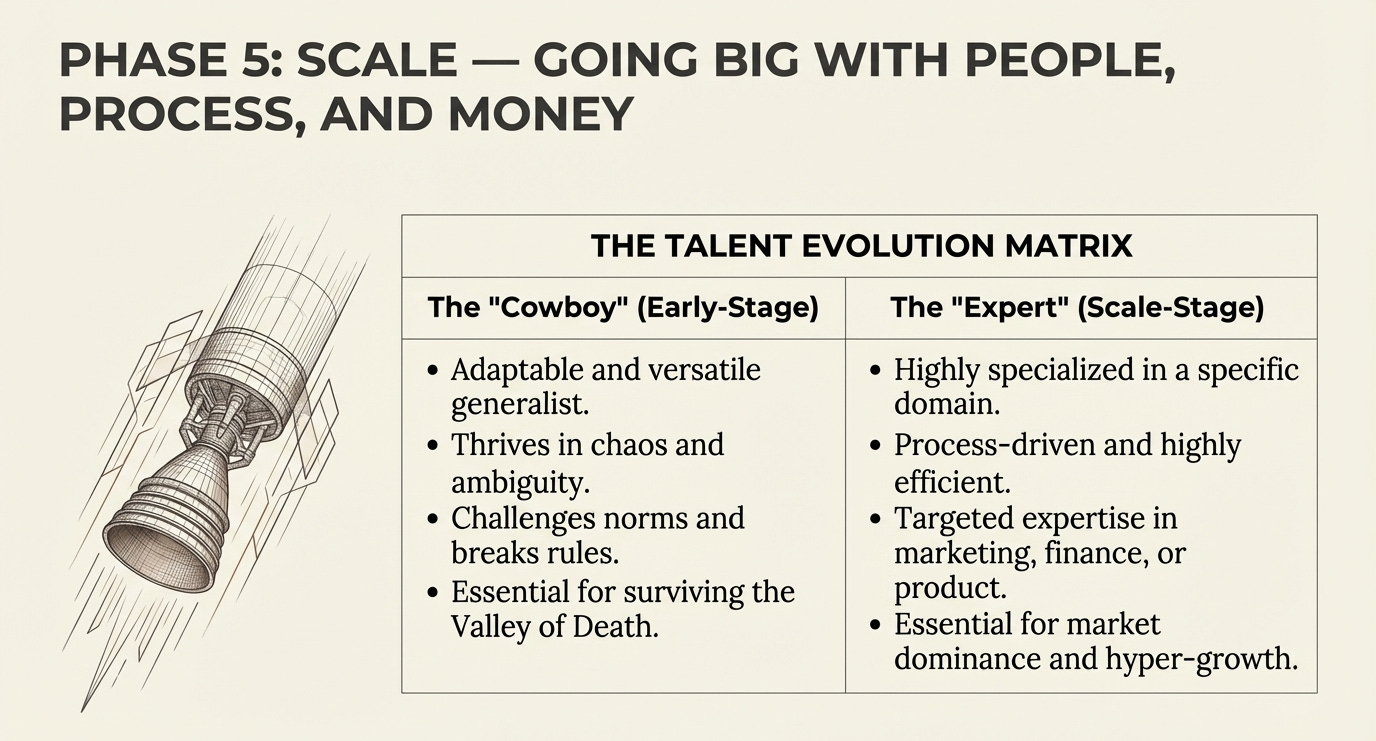
Scaling means massively increasing your operations. During this phase, your focus shifts to three things: people, processes, and money. You will likely need to raise serious venture capital to fund this expansion. You will also need to change how your team operates. In the early days, you needed “generalists” who could do a bit of everything; now, you need to hire experienced “specialists” to handle specific departments. You have to build systems and rules because you can no longer manage every single detail yourself.
6. Harvest: Enjoying the View
You survived the Valley of Death, you morphed, you nailed the model, and you scaled. Now you are in the Harvest phase. Love describes this as the most fun part of the journey.
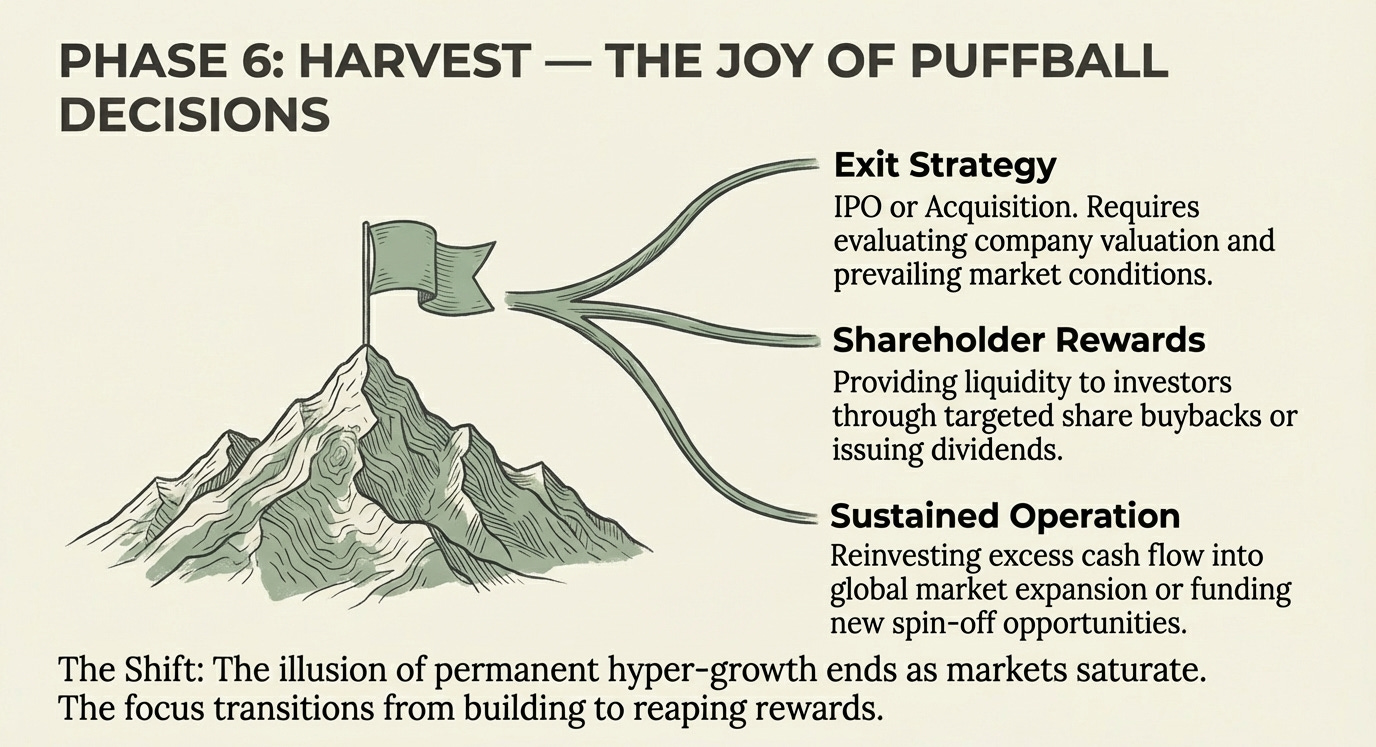
You are generating cash and making what he calls “puffball decisions”—decisions that are generally favorable no matter which option you choose. During this phase, you get to decide how to reward yourself and your investors. Will you take the company public (IPO)? Will you sell it to a larger corporation? Or will you keep running it and enjoy the long-term wealth of compound growth?.
Two Golden Rules for the Road Ahead
As you start your journey, keep these two extra pieces of advice from Love in your back pocket:
Ramen Profitability is a Superpower: Don’t stress too much about raising massive amounts of money on day one. Having just enough money to survive (enough to eat ramen noodles) forces you to be disciplined, focused, and fast. Scarcity is often a better motivator than a bloated bank account.
Make Failure Your Friend: In a startup, operational failures, like a marketing campaign that flopped or a feature that crashed, are normal. Don’t hide from them. Acknowledge them quickly, learn the lesson, and move on. “Fail fast” so you can succeed sooner.
The startup journey is an emotional rollercoaster that will test your patience, your bank account, and your sanity. But by keeping the J Curve in mind, you will know that the initial dip isn’t the end of the road; it is just the beginning of your climb.
Stay flexible, listen to your customers, and enjoy the ride!