


We’ve all heard the panic and read the dramatic headlines: Artificial Intelligence is coming for our jobs. But a fascinating new study published by Anthropic in March 2026 finally cuts through the noise with some actual data.
Instead of just guessing what AI could do, the researchers created a brilliant new metric called “observed exposure”. This metric blends the theoretical capabilities of AI with real-world usage data from their Claude platform to see what workplace tasks are genuinely being automated today.
The biggest takeaway from the study is that we can all take a deep breath, because AI is still far from reaching its theoretical capabilities.
Who is really feeling the impact?
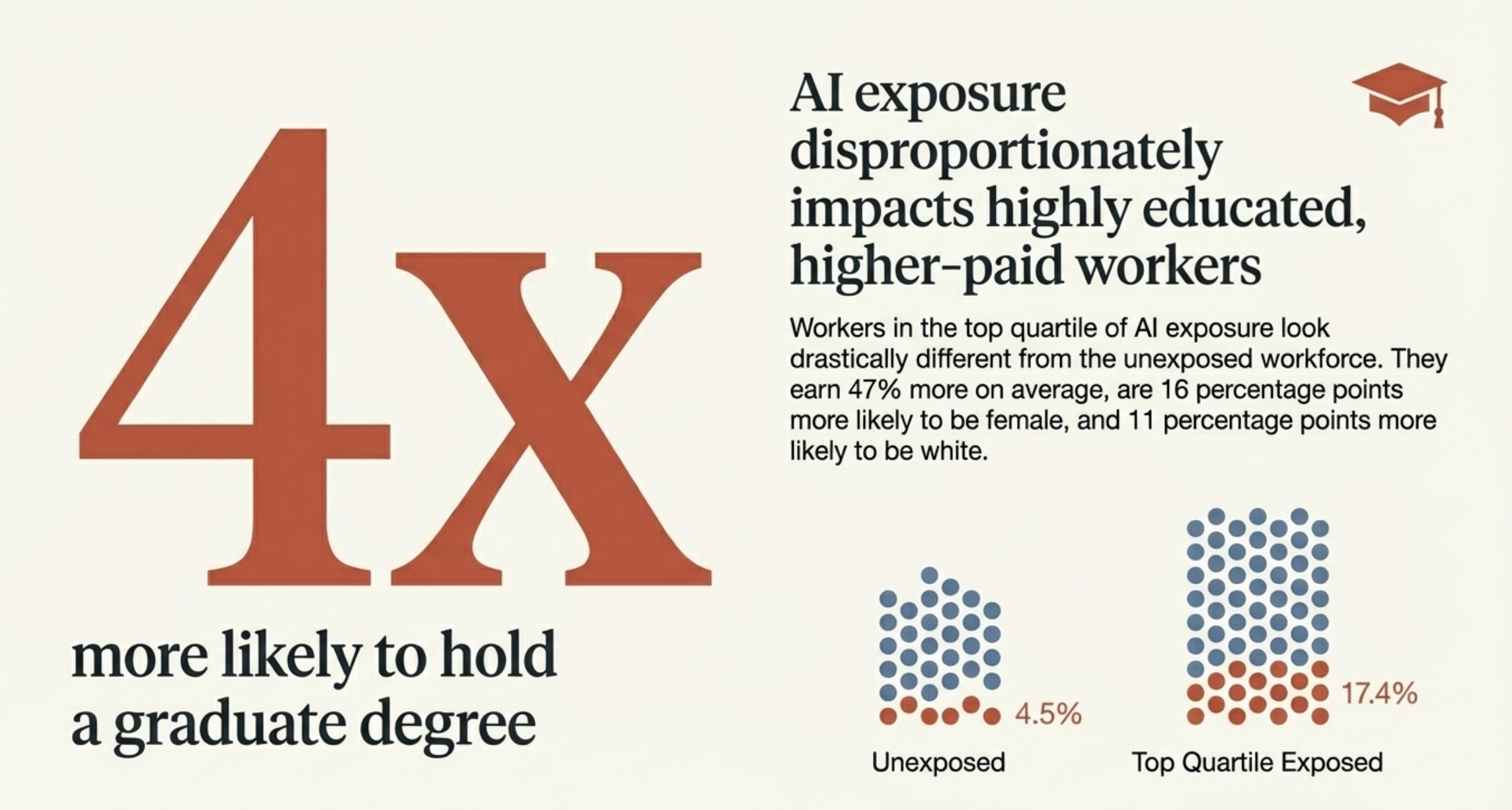
When we think of vulnerable workers, we often picture blue-collar jobs or entry-level roles, but the data shows the exact opposite. The workers who are most exposed to AI automation are actually more likely to be older, female, highly educated, and higher-paid. In fact, the report highlights that people with graduate degrees are almost four times more likely to be in the most highly exposed group compared to the unexposed group.
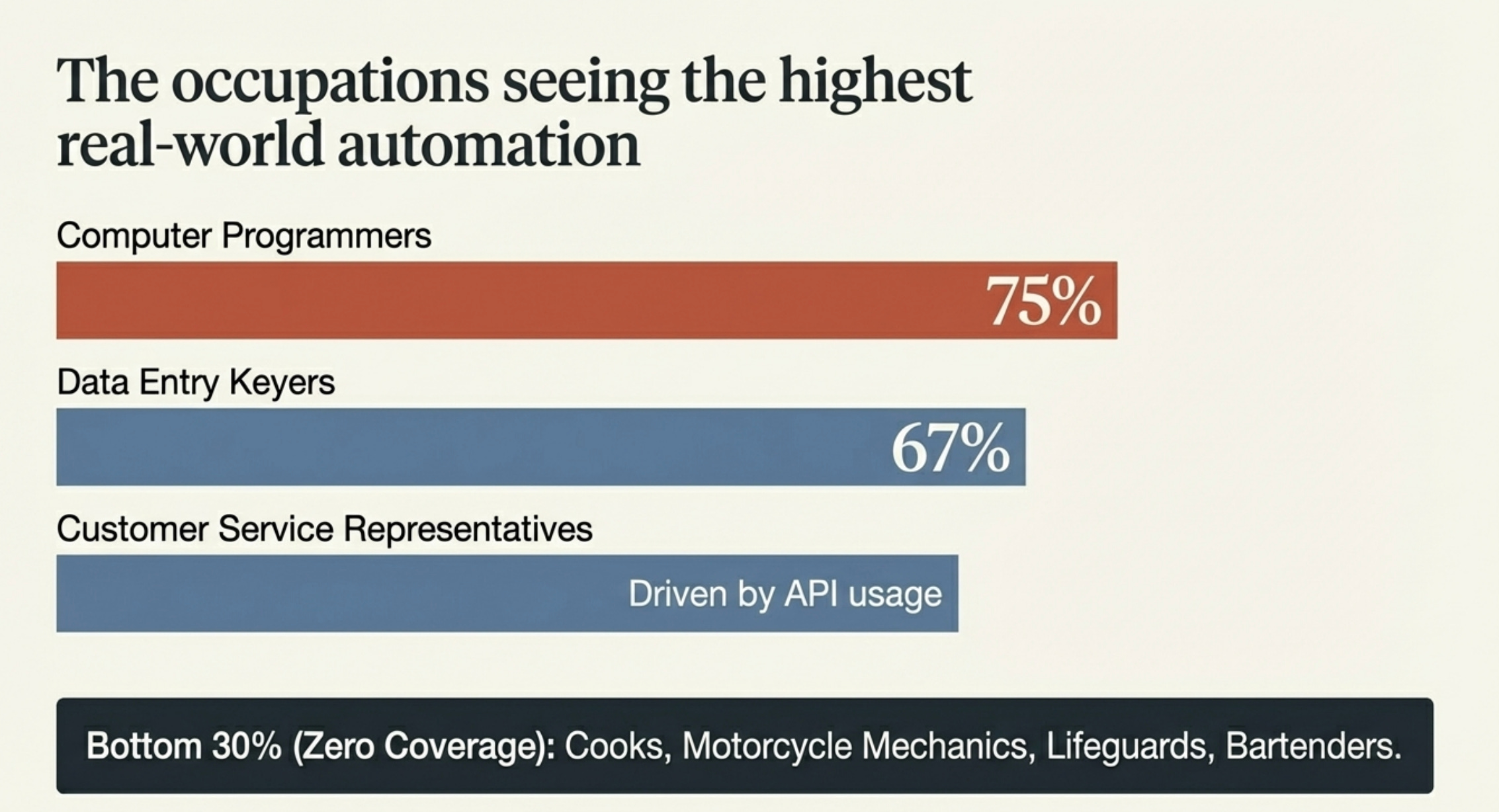
So, what are these highly exposed jobs? The professions leading the pack right now include Computer Programmers (with a massive 75% of their tasks covered by AI capabilities), Customer Service Representatives, and Data Entry Keyers. On the flip side, jobs requiring physical presence or specialized non-digital skills, such as cooks, lifeguards, and mechanics, have virtually no AI exposure.
Are the mass layoffs happening?
Here is the best news from the report: despite the explosive growth of tools like ChatGPT since late 2022, there has been no systematic increase in unemployment for workers in these highly exposed jobs. The catastrophic job losses some predicted simply haven’t materialized in the aggregate unemployment data yet.
A subtle shift for younger workers
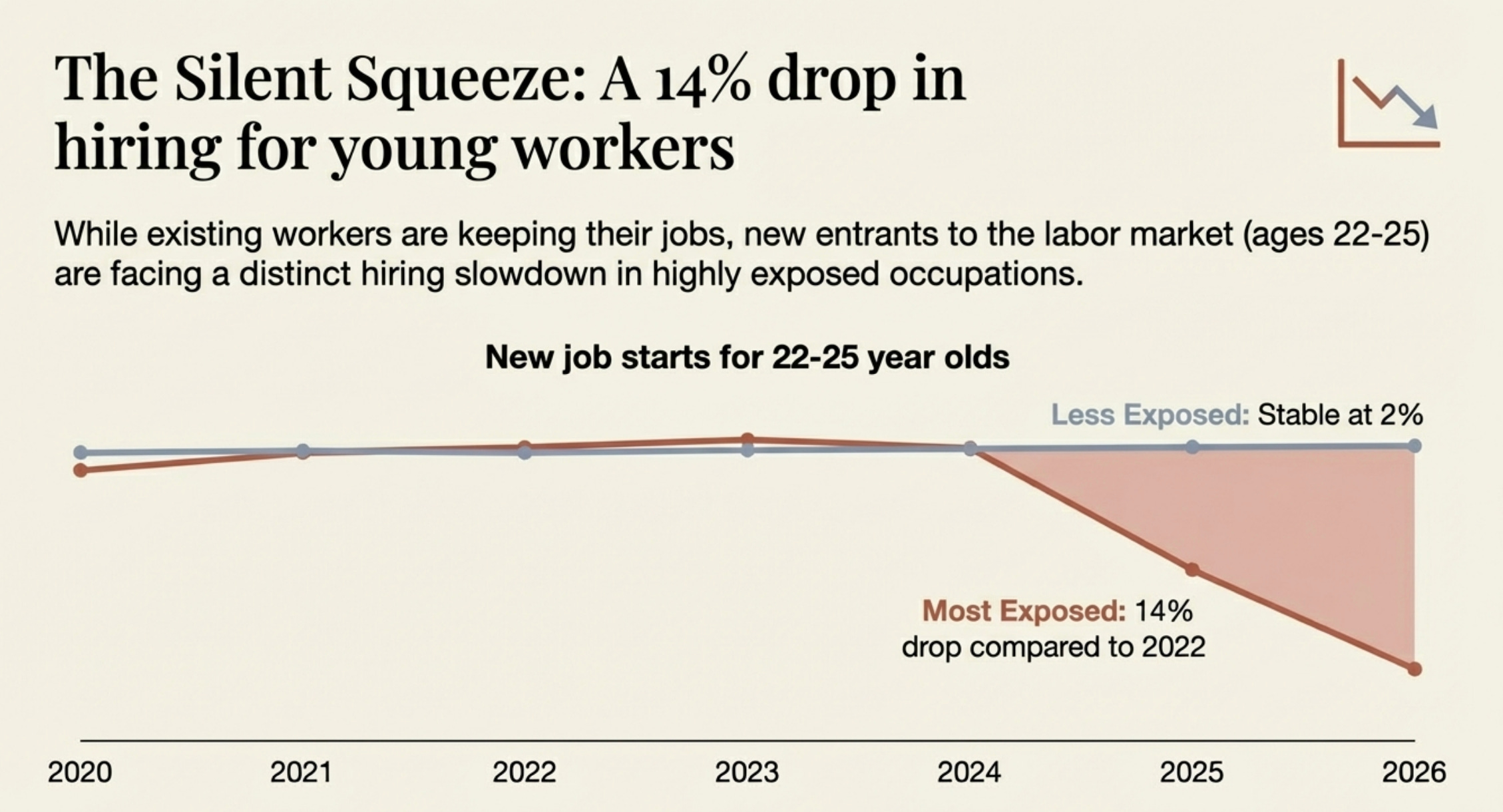
While older, established workers seem to be holding onto their jobs just fine, the research found a concerning trend for the next generation. There is suggestive evidence that hiring for young workers (ages 22 to 25) in highly exposed occupations has noticeably slowed down. Specifically, the rate of young workers finding new jobs in these vulnerable fields has dropped by about 14% since the post-ChatGPT era began.
So, while AI isn’t causing mass layoffs, it might be quietly closing the door on entry-level opportunities in certain white-collar fields.
Looking ahead
Anthropic’s research shows that the AI revolution in the workplace is definitely happening, but it’s more of a gradual integration than an overnight economic apocalypse. As capabilities grow, we will inevitably see more tasks automated, and the US Bureau of Labor Statistics already projects slightly weaker employment growth for these highly exposed jobs through 2034.
For now, your job is probably safe, but if you’re a recent grad trying to break into coding, finance, or data entry, you might find the job market just a little bit tougher to crack than it used to be.
Read the full 2026 Anthropic Research Paper